Ranthambore school trip

Ranthambore School and College Educational Tours

Ranthambore is one of the most popular educational excursions for schools and colleges in Delhi NCR, Rajasthan and Gujarat, and for good reason: students see a tiger reserve working in real life, walk a UNESCO-listed hill fort, and learn about conservation from naturalists who do it every day. We plan school and college trips around safety, a fixed per-student price and a programme teachers can share with parents before departure.

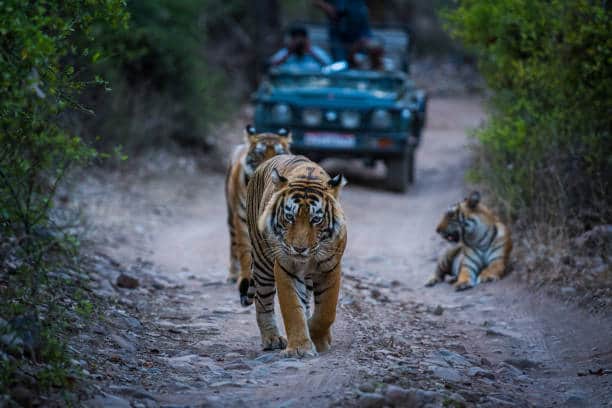
Two young tigers running along a dusty forest track
Suits
Class 4 upward, colleges, universities
Typical length
2 nights, 3 days
Safari vehicle
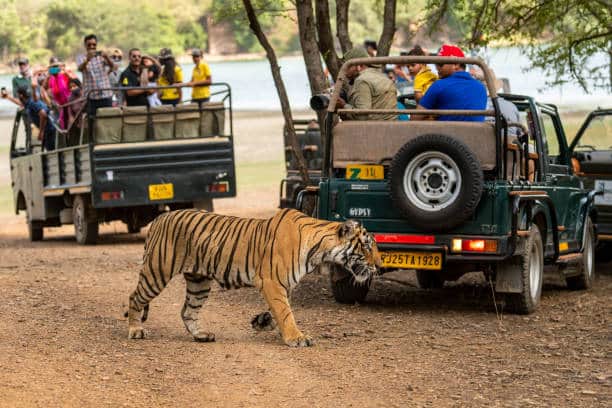
20-seat canter
Pricing
Per student, all-inclusive quote

Send a Canter Safari Booking Request

Please provide authentic details as per government ID for safari permits.

Primary Contact
Safari Details
Visitor Details

Please provide accurate details. Name and ID must match the government-issued ID presented at the park entrance.

Visitor 1

Add-ons & Requests

Booking Summary

Date:Not selected
Time:Morning Safari (approx. 6:30 AM)
Vehicle:Shared Canter (20 Seater)
Guests:1

No payment now. We check permit availability and confirm the price with you first.

What Students Learn

A safari with a registered naturalist turns textbook ecology into something students can see: food chains, predator and prey behaviour, how water drives the dry deciduous forest, and why a tiger needs so much territory. The fort and its ruins cover medieval Rajput history, and Padam Talao and the lakes show wetland birds and marsh crocodiles. For college groups in zoology, botany, environmental science, forestry and tourism, we can add a focused field session or a talk on Project Tiger and reserve management.
A Typical Three-Day Programme

Day 1: travel by train or coach, arrive by afternoon, check in, an orientation talk on the park and safety rules, dinner. Day 2: morning canter safari, breakfast, a guided walk up Ranthambore Fort and the Trinetra Ganesh Temple, rest after lunch, then the evening safari or a visit to a local craft centre, and a quiz or bonfire in the evening. Day 3: early safari for groups that want it, checkout and return. Younger classes often do a single safari and more sightseeing.

Safety and Supervision

We use resorts that take school groups regularly, with separate wings or floors for boys and girls and rooms next to the teachers. Meals are vegetarian by default, with fixed timings and filtered drinking water. Students ride in canters with the naturalist and driver, and every vehicle carries a teacher. Our coordinator stays with the group throughout and manages headcounts at every departure. We share a printed programme, an emergency contact sheet and a packing list for parents.

Safari Permits for Students

Every visitor needs an individual forest department permit issued against a name and ID. For students we collect the list in one spreadsheet, using school or college ID cards or Aadhaar as the department allows, and book the permits together so the group is on the same slot. A canter seats twenty, so a class of sixty fills three. Zones are allotted by the department and permits cannot be transferred once issued, so the final list matters.

Travel to Ranthambore

Sawai Madhopur is on the main Delhi to Mumbai rail line, which makes it simple for school groups from Delhi NCR, Kota, Mathura, Vadodara and Mumbai to travel by train. From Jaipur, Ajmer and Tonk the coach ride is three to four hours. We book group train quotas where available, or arrange coaches with experienced drivers, and meet the group at the station.

Pricing and What It Covers

We quote a single per-student price that covers stay on a shared basis, all meals, safaris, the fort visit, local transport and the coordinator, with teacher places priced separately. Train or coach from your city is quoted on top so you can compare. The per-student cost depends on the number of safaris, the hotel, the season and the group size, so we send an itemised quote for your exact programme.

Best Months for a School Trip

October, November, February and March are the most comfortable, with mild days and cool mornings. December and January work well but mornings in an open canter are cold, so students need warm layers. April to June is hot and best avoided for younger classes. The core zones close from July to September.

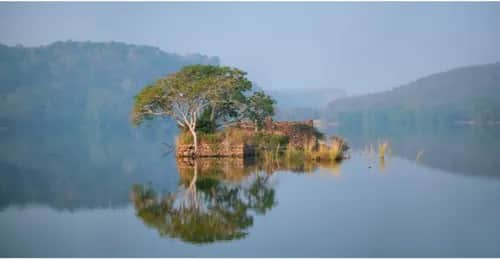
Padam Talao at dawn, seen from below the fort hill
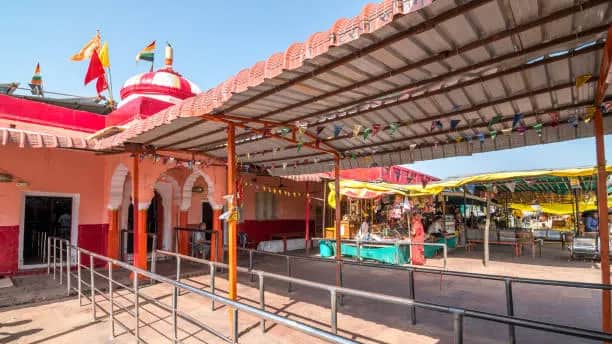
Trinetra Ganesh Temple inside Ranthambore Fort

Sample Educational Programme

DayMorningAfternoon and evening
Day 1Train or coach to Sawai MadhopurCheck in, orientation talk, dinner
Day 2Canter safari with naturalistRanthambore Fort and Ganesh Temple, evening quiz
Day 3Optional second safariCheckout and return journey

Frequently Asked Questions

Is Ranthambore safe for a school trip?

Yes, with the right planning. Students travel in forest department canters with a driver and naturalist, stay in resorts that host school groups, and are supervised by teachers and our coordinator throughout.

What is the cost of a Ranthambore school trip per student?

It depends on the number of safaris, the hotel, the season and group size. We quote a single per-student price that covers stay, meals, safaris, sightseeing and local transport, with travel from your city itemised separately.

Which classes is the trip suitable for?

We usually plan for Class 4 upward. Younger groups get a shorter programme with one safari and more time at the fort and resort.

What ID do students need for the safari?

Every student needs a valid ID for the permit, typically a school ID card or Aadhaar. We confirm the accepted documents when we collect the list.

Can colleges arrange a field study in Ranthambore?

Yes. Zoology, environmental science, forestry and tourism departments often add a naturalist-led field session or a conservation talk to the safaris.