Padam Talao

Padam Talao

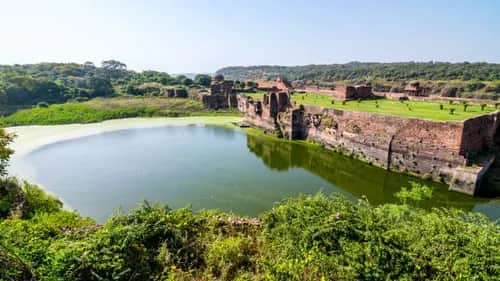
Padam Talao is the largest of the three lakes in Ranthambore and the one you see from the fort ramparts. Its name comes from the water lilies that cover parts of the surface in season, and Jogi Mahal stands on its bank. It is inside the park and reached only on safari, most often on a zone 3 permit.

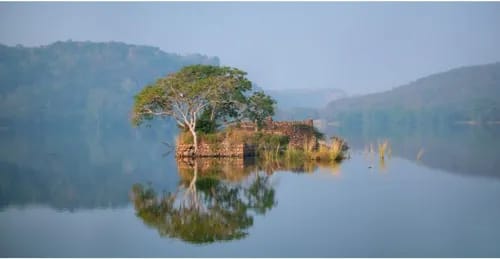
Tree on a small island in Padam Talao at dawn
Location
Inside the park, directly below Ranthambore Fort
Safari zone
Usually zone 3; zones can change by notification
Best time
First hour of the morning safari
Entry
Safari permit only; no walking access

Background

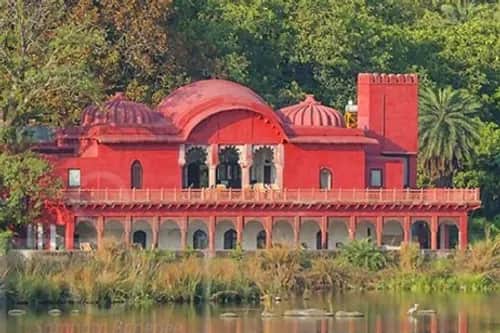
Padam Talao is the largest of the three connected lakes that sit in the valley below the fort, with Raj Bagh Talao and Malik Talao further along. "Padam" refers to the lotus and water lily, and in the cooler months the shallows near the banks carry a spread of lily pads and flowers that give the lake its name. The Jaipur rulers built Jogi Mahal on its shore as a hunting lodge, and for decades the lake has been the setting for the tiger photographs most people associate with Ranthambore.
What You See

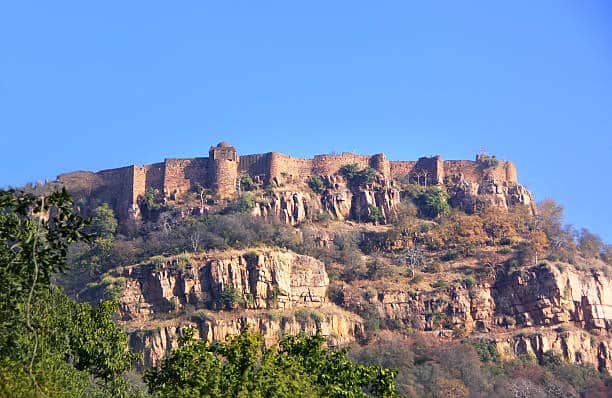
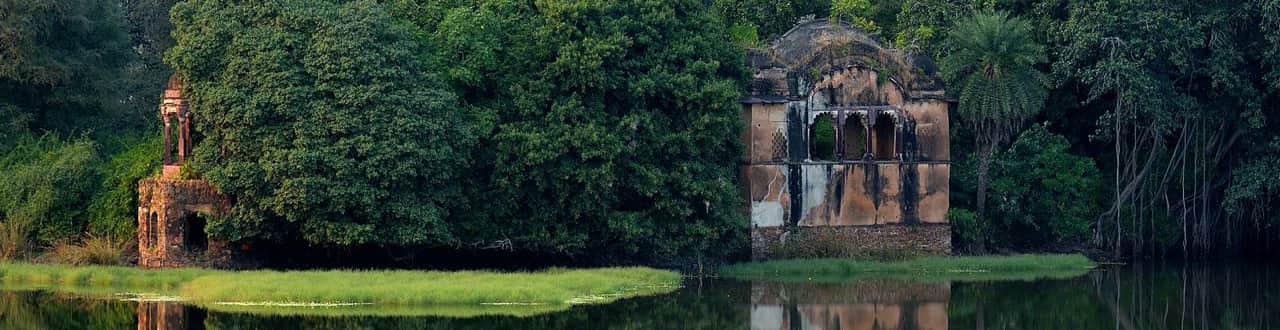
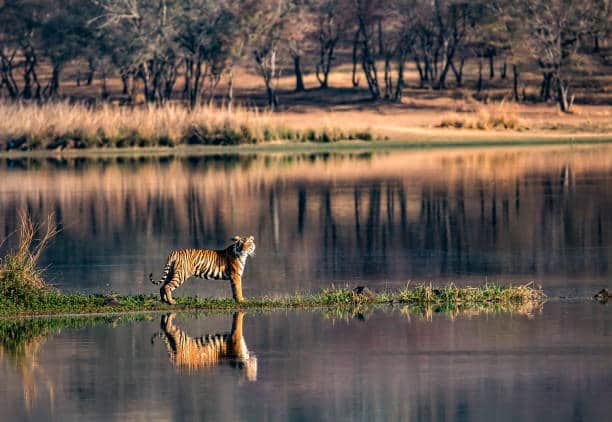
The drive along the lake gives you open water with the fort walls rising behind it, a small tree-covered island near one bank, and Jogi Mahal with its banyan tree at the far end. Marsh crocodiles bask on the mud edges and sambar deer wade in to feed on the weed, often up to their chests. Tigers are seen on the banks and in the grass margins in most seasons, particularly in summer when the water draws everything in. Birds are constant: cormorants, egrets, kingfishers, and in winter a scattering of ducks.

Which Zone and How to Reach

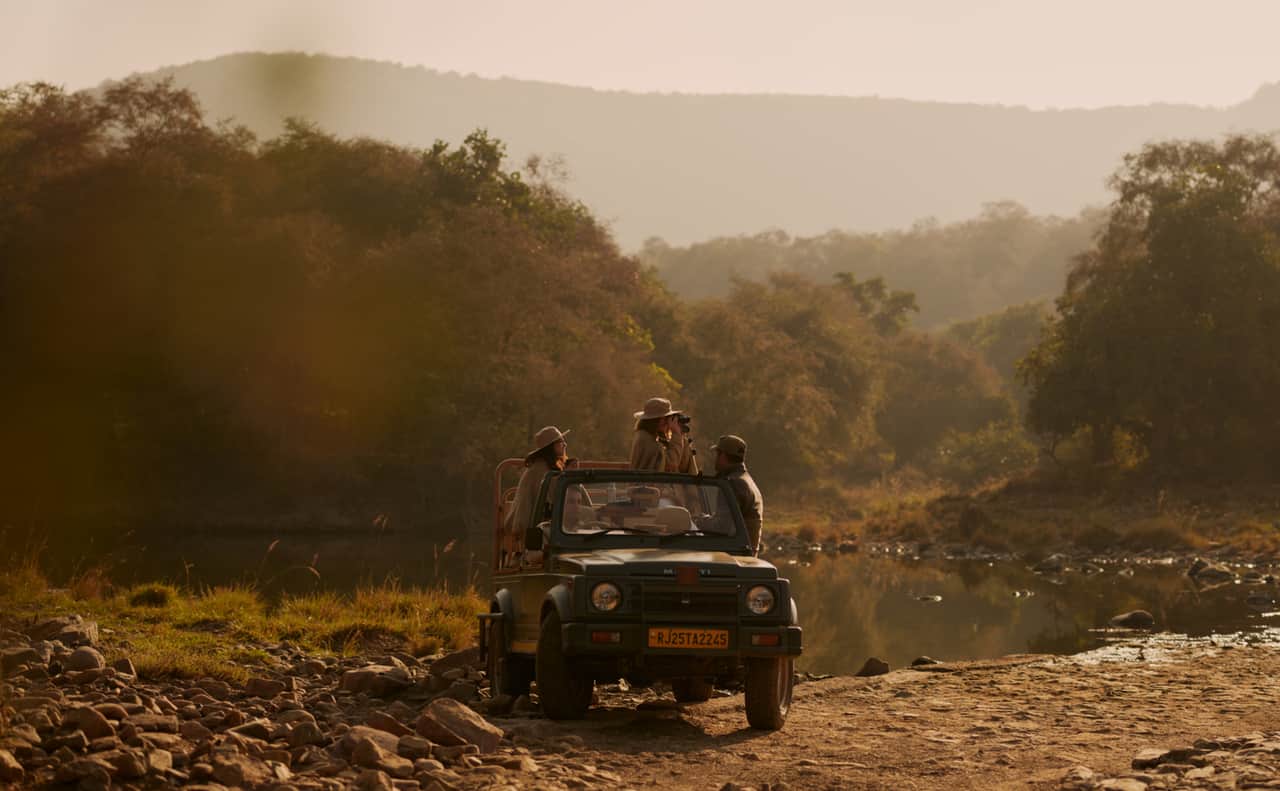
Padam Talao lies inside the tourism area and there is no walking or private-vehicle access. You see it from a jeep or canter on a permit that covers the lake side, which at the time of writing is zone 3 through the main entrance past the fort hill. Zone numbers and route boundaries change with forest department notifications, so we confirm the current position when you book. The department allots zones when permits are issued; we can request the lake side for you but cannot promise it.

Best Time and Season

The lake is at its most photogenic in the first hour of a winter morning safari, when mist lies on the water and the light is low across the fort. October to February gives full water, lilies and comfortable temperatures. From April to June the level drops, the margins turn to mud, and wildlife activity at the water rises sharply because there is little water elsewhere; this is when lakeside tiger sightings are most often reported, though never guaranteed. The park is closed in the monsoon, when the lake refills.

Photography Tips

Bring a wide or mid-range lens as well as your long one. The scene here is the point: fort, water and forest together, and a tight tiger crop loses it. On a morning drive ask the driver to pause at the first clear view across the lake while the mist is still up. Reflections are best when the wind is down, which usually means early. A polariser helps with the glare off the water later in the morning. Keep your ISO ready for the shaded bank under the banyan, where the light is much lower than on the open water.

Combining with a Safari

Padam Talao is not a separate visit; it is part of a safari. If seeing it matters to you, tell us when you book and we will explain what zone allocation looks like for your dates. Booking two safaris improves your chances of one falling on the lake side. You can also see the lake from above, without a permit, by climbing the fort: the rampart walk on the lake side gives a full view of Padam Talao and Jogi Mahal, which many guests do on the afternoon between safaris.

Practical Tips

Stay seated in the vehicle at the lake edge; crocodiles are common and the driver will not stop where getting down is allowed anyway. Winter mornings here are cold and damp, so wear a proper jacket and something over your ears for the first hour. Bring binoculars for the far bank, where most of the wildlife stands. If you are with children, the lake stretch is usually the most rewarding part of a zone 3 drive because there is always something to look at even when tigers are absent.

Red-walled Jogi Mahal beside Padam Talao
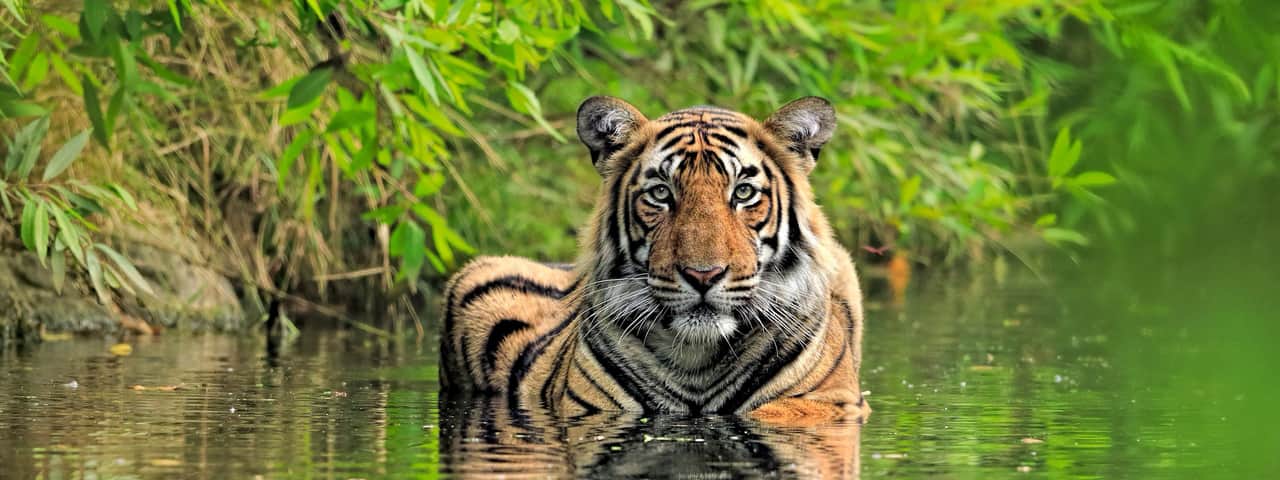
Tiger reflected in a Ranthambore lake

Padam Talao Through the Season

MonthsWater levelWhat to expect
October to NovemberFull after monsoonLilies, birds, lush banks, mist at dawn
December to FebruaryHighCold mornings, best light, ducks and waders
MarchFallingWarmer, margins opening, good activity
April to JuneLowHot, mud edges, most reported lakeside tiger activity
July to SeptemberRefillingPark closed; visible only from the fort

Frequently Asked Questions

Which zone covers Padam Talao?

At the time of writing it is on the zone 3 route through the main entrance. Zone boundaries are set by the forest department and can change, so we confirm the current arrangement when you book.

Can I visit Padam Talao without a safari?

Not at ground level; the lake is inside the tourism area. You can see it from above by climbing Ranthambore Fort, which needs no permit and gives a clear view of the whole lake and Jogi Mahal.

Are there crocodiles in Padam Talao?

Yes, marsh crocodiles are seen basking on the banks on most drives, especially in the cooler months when they come out to warm up. They are one reason nobody gets down from the vehicle here.

Is Padam Talao good for tiger sightings?

It is one of the better known settings for them, especially in summer when water is scarce elsewhere, but no lake or zone guarantees a sighting. Go for the setting and treat a tiger as a bonus.

When are the water lilies out?

Mostly in the cooler months after the monsoon, roughly October to February in most years. By late summer the shallows have dried and the lilies are gone.