How Booking Works, Step by Step
First, fill in the form with your date, slot, vehicle, and every visitor's name and government ID number exactly as printed on the card. Second, we check permit availability for that date and slot and contact you on the mobile number you gave with the current price. Third, once you approve, the permit is issued against those names. Finally, you receive the permit details, reporting time, and pickup plan. Nothing is charged when you send the form.
What You Need Before You Book
Have the travel date, preferred slot, and vehicle ready, along with each visitor's full name, gender, nationality, and ID number. Indian visitors can use Aadhaar, voter ID, driving licence, or passport. Foreign nationals must use passport details. Every visitor carries the same original ID to the gate, where it is checked against the permit, so a spelling mismatch can mean being turned away.
Jeep or Canter: Which to Book
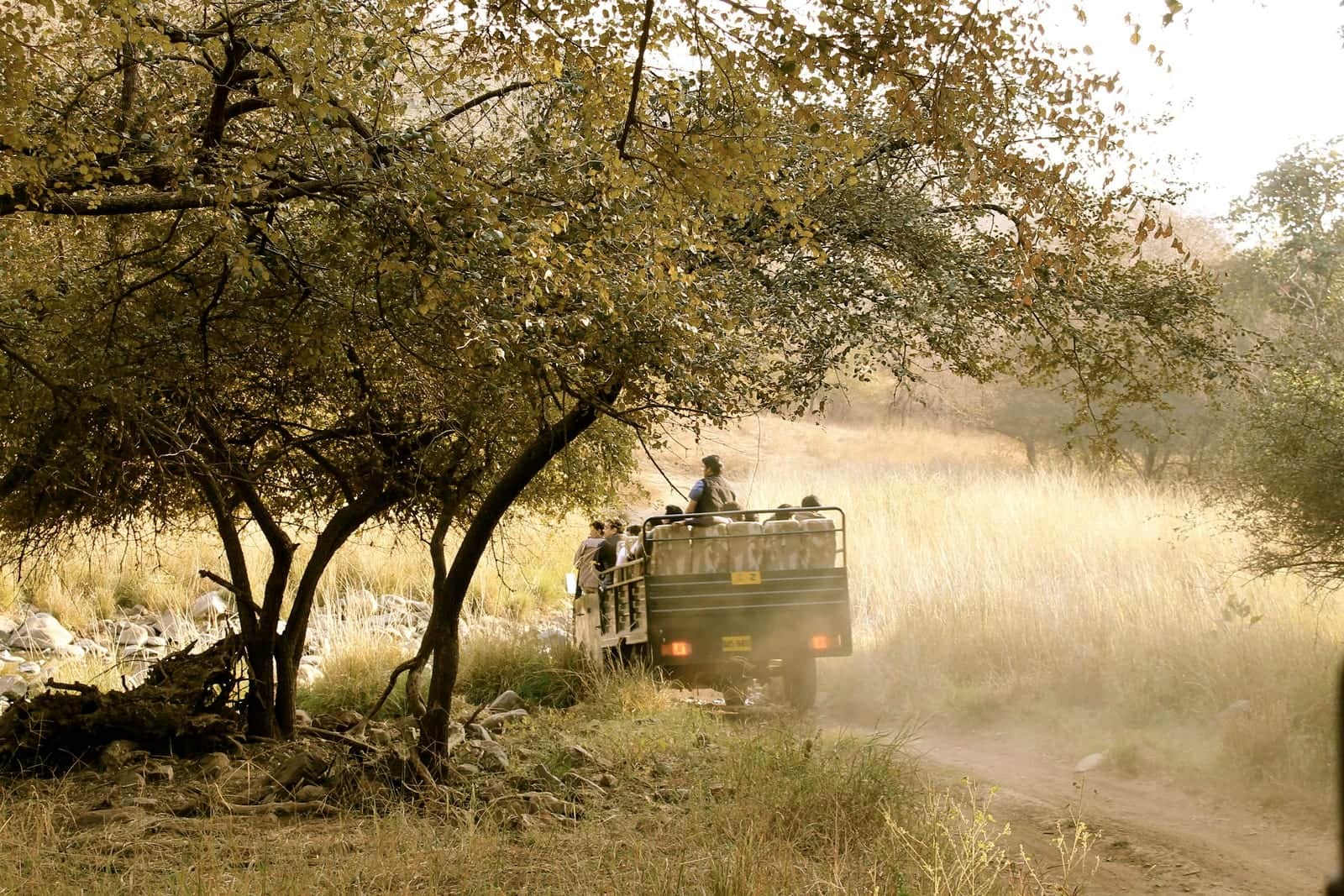
A jeep (also called a gypsy) seats six. You can buy a single seat in a shared jeep or reserve all six seats as a private jeep. A canter seats twenty and is always sold per seat, which makes it the cheapest way into the park. Both are allotted the same zones under the same permit rules, so sighting chances depend on the zone, season, and luck rather than the vehicle. The difference is comfort, noise, and privacy.
Safari Price at a Glance
A shared jeep seat costs approximately ₹2,200 to ₹2,500 for Indian visitors and ₹4,500 to ₹5,000 for foreign nationals. A canter seat is roughly ₹1,500 to ₹1,600 for Indians and ₹3,800 to ₹4,200 for foreign nationals. A private jeep starts from about ₹32,000. The rate covers the forest permit, the seat, the driver, and a registered naturalist. The forest department revises fees periodically, so the quote we send confirms the current rate for your date.
Zones You Can Request
Ranthambore has ten safari zones. Zones 1 to 5 are the traditional core areas most associated with tiger sightings, and zones 6 to 10 are buffer routes with fewer vehicles and good birdlife. You can state a zone preference, but the zone is allotted with the permit and depends on availability. Each drive covers one zone, which is why two or more safaris across different zones improve the odds of a tiger sighting.
When to Book for the 2026-27 Season
Permits are released in three-month blocks at 12 noon: October to December opened on 1 August 2026, January to March 2027 opens on 1 November 2026, and April to June 2027 opens on 1 February 2027. No date can be booked before its block opens, and New Year, Republic Day and Holi dates are usually gone within hours of release. Weekends from October to February and dates around Diwali and Christmas also sell out weeks ahead, while midweek dates in October, November and February are easier. If your trip is fixed around a train booking or a family event, book the safari first and plan the rest of the itinerary around the slot you receive.
Booking Yourself vs Booking Through a Local Team
You can book a bare permit yourself through the forest department's official online booking system. What a local team adds is entering every ID correctly so nobody is refused at the gate, checking alternative slots or vehicles when your first choice is gone, timing hotel pickup to the reporting gate, and one phone number to call on the day of the safari.
Changes and Cancellations
Changes are simplest before the permit is issued, because once it is raised against traveller names it is tied to that date and slot. Ask about change and cancellation terms before you approve the booking, and tell us early if your dates are uncertain so the confirmation can be timed sensibly.
On the Day of Your Safari
Be ready for pickup about an hour before the slot starts, carry the same original ID used for the booking, and keep your phone switched on. Wear muted colours such as khaki, olive, or grey, and carry a warm layer for November to January mornings, when open vehicles get cold.