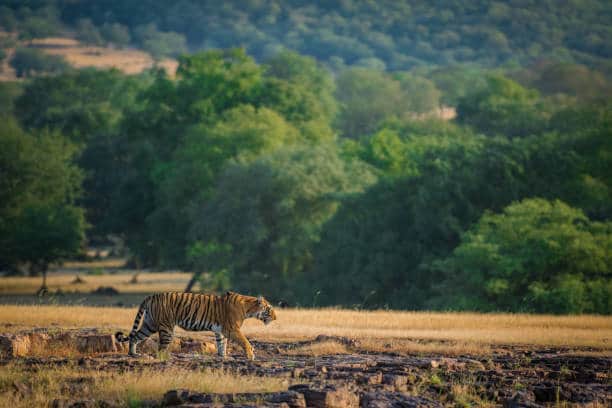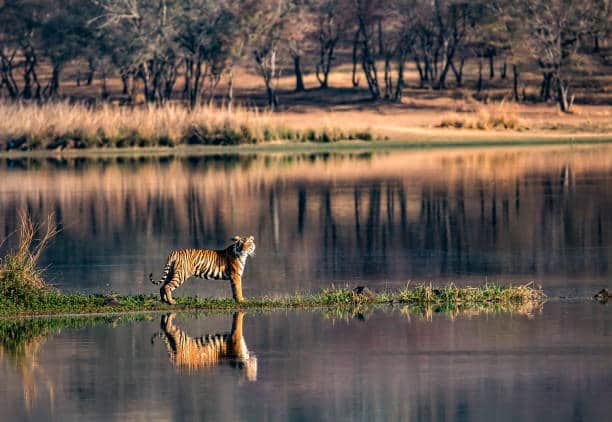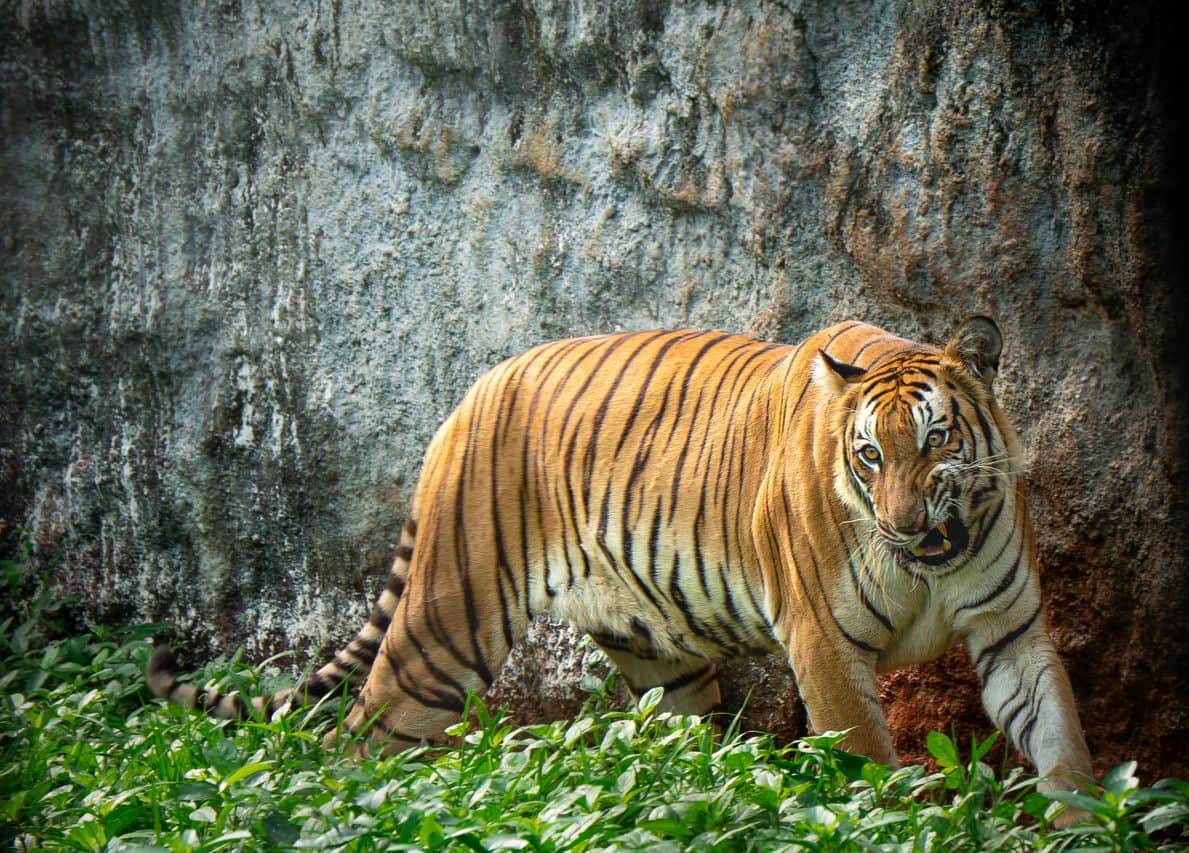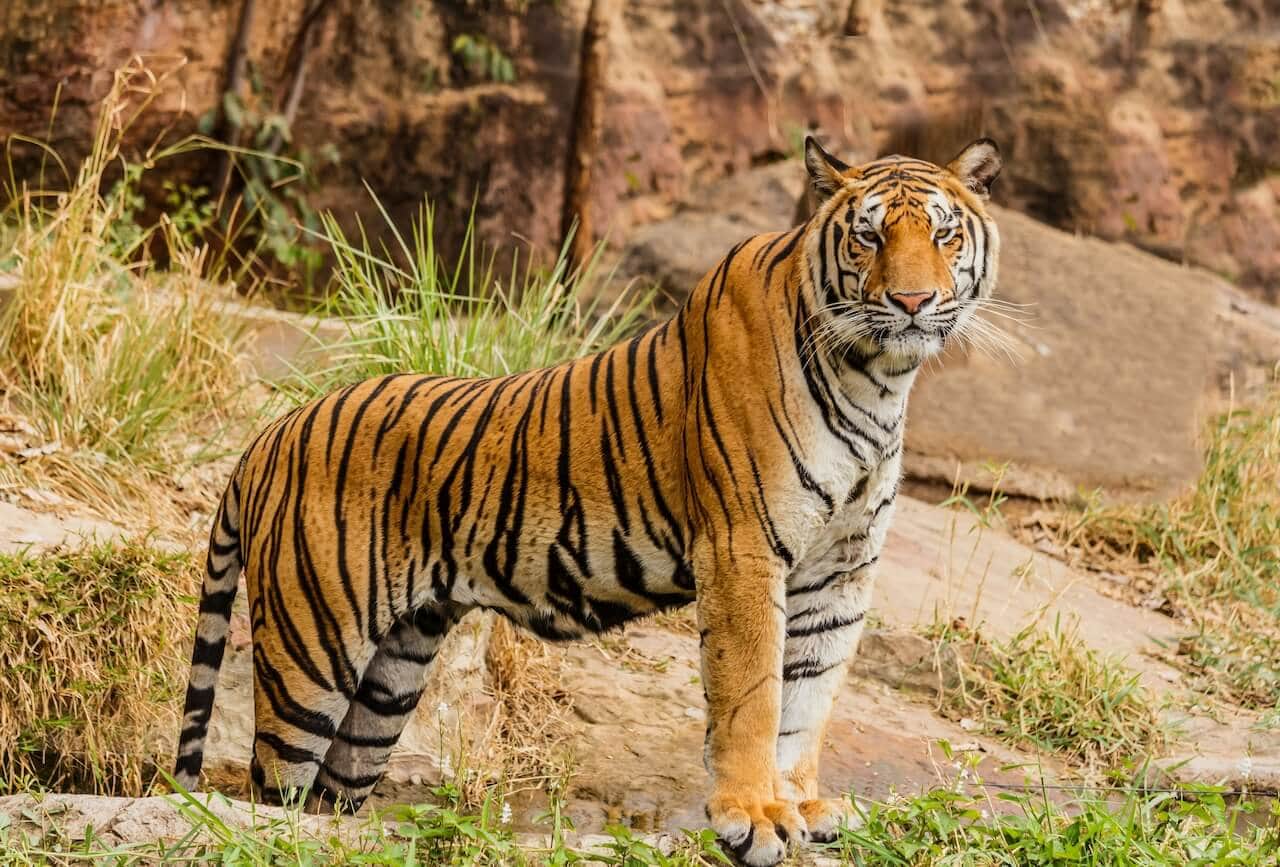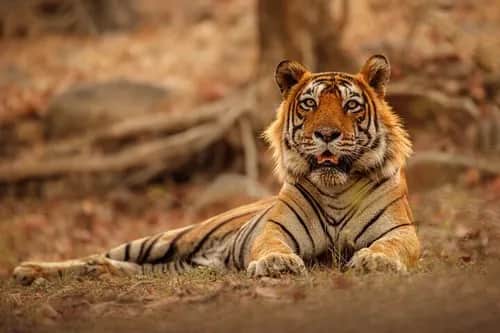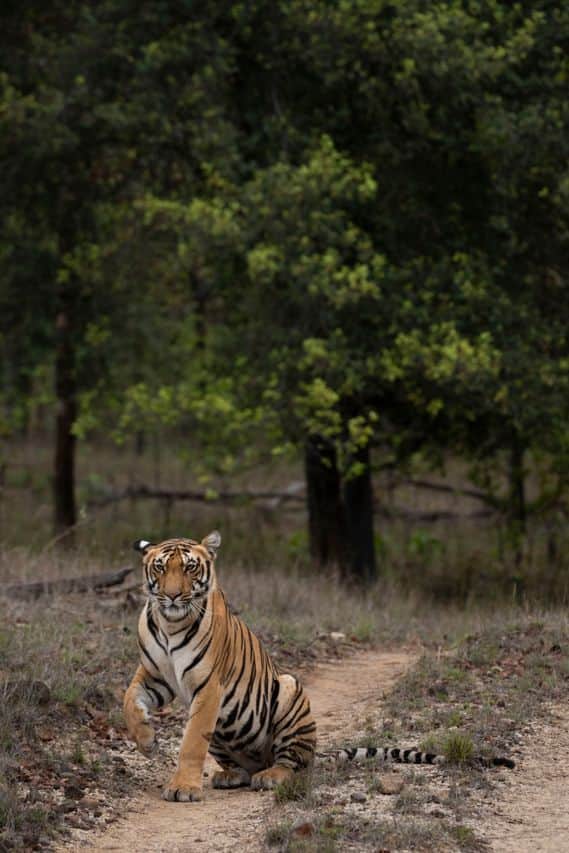
Noor T-39 Ranthambore

Noor (T-39), the Mother of the Zone 1 Side

Noor (T-39) is the tigress most associated with the zone 1 and zone 6 side of Ranthambore, around Sultanpur. She has raised several litters there, the best known being Sultan (T-72) from 2012, and her cubs from 2019 became regulars for visitors who drew those zones. Her current status should be checked against recent sighting reports before you plan around her.

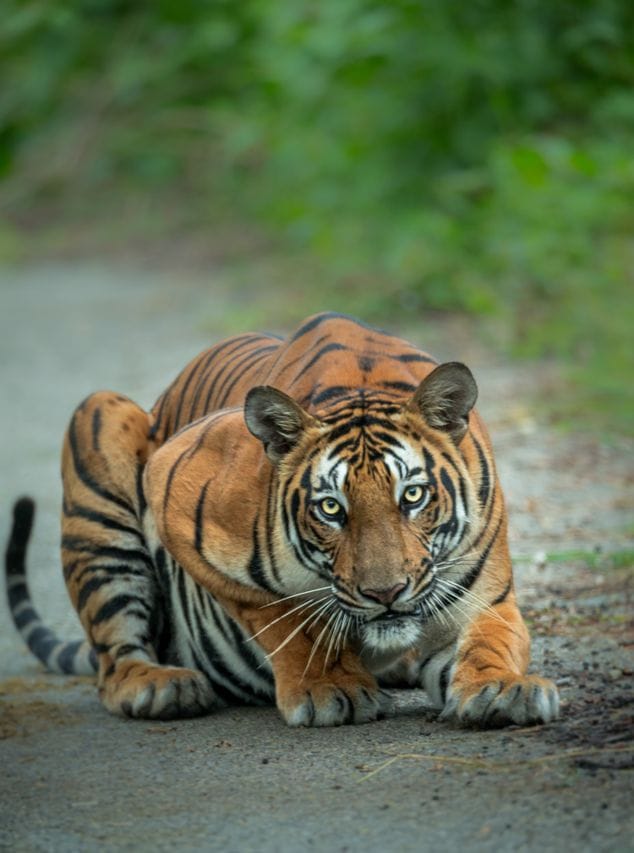
Tiger crouching on a forest road in Ranthambore
T-number
T-39
Sex
Female
Associated zones
Zones 1 and 6, Sultanpur side
Status
Reported alive; check recent reports

Identity and Markings

Noor means light, and she was named for her pale, clean coat as a young tigress. She is medium-sized with a neat, symmetrical face and has been relaxed around vehicles for most of her life, which is why so many photographs from the zone 1 side feature her. Guides identify her by the stripe pattern above the eyes and on the cheeks. As she has aged her face has broadened, so photographs from a decade apart can look like two different animals.
Life Story

Noor established herself on the Sultanpur side in the early 2010s and paired with Ustad (T-24), the resident male until his relocation in 2015. Her first well-known litter, in 2012, included Sultan. She raised further litters through the decade, and her 2019 cubs were seen so often that they became a reason visitors requested zone 1. As of recent seasons she is reported to still be present, though older tigresses lose ground to their daughters, and we would not describe her current range with confidence.

Territory and Zones

Her territory has centred on the zone 1 side, with overlap into zone 6 and the buffer beyond the tourism boundary. This is a mix of open track, dense edge and a few reliable waterholes. It is also close to villages, which is why the tigers here are more often in the news than those at the lakes. Zone boundaries are set by forest department notifications and zone 6 in particular has been adjusted over the years, so treat any zone number in an older report as approximate.

Lineage

Noor's mate for her early litters was Ustad (T-24). Sultan (T-72), born in 2012, is her best known cub and was widely photographed as a young male before dispersing. Later litters, including the 2019 cubs, are attributed to males that moved in after Ustad's removal. Several of her daughters are reported to have taken up territory around her, which is the normal pattern: a successful tigress ends up surrounded by her own offspring. Which of them is where in any given season is a question for recent sighting reports, not for a web page.

Famous Moments

Noor's fame is cumulative rather than built on one event. She was photographed with Ustad in the years before his removal, walked her 2012 cubs along the zone 1 tracks in front of hundreds of visitors, and did the same with her 2019 litter. She is also one of the tigresses whose family drew attention to the buffer areas, since her cubs regularly used ground outside the traditional core zones. Among guides she is simply "the mother", which says most of it.

Planning a Safari With Noor in Mind

Ask us to request zone 1 or zone 6; allocation is by the forest department permit system and we cannot promise either. Both zones suit a first-time visitor because the drive is varied and there is a fair amount of open track. If Noor or her daughters have cubs in a given season, afternoon drives near waterholes are often productive, but that depends on the month and the year. Tell us your dates and we will check what has been reported recently before recommending a slot.

Why Sightings Are Never Guaranteed

A tigress with young cubs is the hardest animal in the park to see, because she hides them and hunts away from tracks. A tigress whose daughters have taken over is seen less because she has moved to the edges. Both describe Noor at different points in her life. Recent sighting reports tell you which is true this fortnight. Nothing tells you what she will do on your drive, and we would rather say so than pretend otherwise.

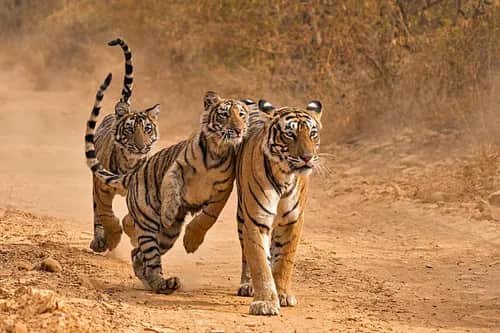
Two young tigers running along a dusty forest track
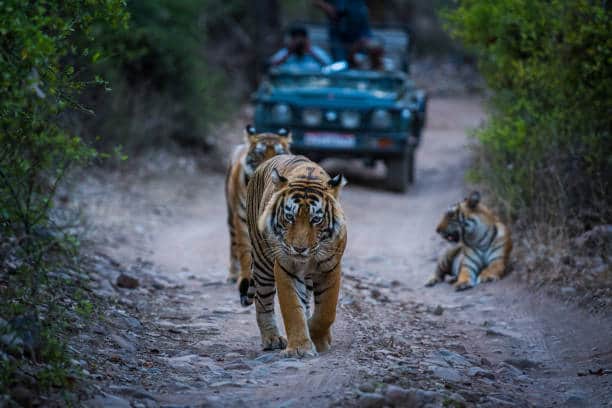
Tigers on a forest track with a safari jeep behind them

Noor's Family

RelationTigerNotes
Mate (early litters)Ustad (T-24)Relocated to Udaipur in May 2015
Cub, 2012 litterSultan (T-72)Widely photographed young male; dispersed
Later littersVarious, including 2019 cubsAttributed to males resident after 2015; check recent reports
DaughtersReported holding ground around zones 1 and 6Identities and ranges vary by season

Frequently Asked Questions

Is Noor T-39 still alive?

As of recent seasons she is reported to be present on the zone 1 and 6 side, but older tigresses lose ground to their daughters and are seen less. Check recent sighting reports or ask a guide for the current picture.

Who are Noor's cubs?

Sultan (T-72), born in 2012, is the best known. She has raised several further litters, including cubs born in 2019 that became regulars for zone 1 visitors. Several daughters are reported to hold territory near her.

Which zone is Noor in?

Zone 1 and zone 6 around Sultanpur, with use of the buffer beyond. Zone boundaries are set by the forest department and have changed over time.

Who was Noor's mate?

Ustad (T-24) for her early litters, until his relocation to Udaipur in 2015. Later litters are attributed to males that moved in afterwards.

Is zone 1 a good zone for tigers?

It is often productive, particularly when Noor or her daughters have cubs, but it varies by season. Ask for recent sighting reports and remember that zones are allocated by the permit system, not chosen.