Jhumru T-20 Ranthambore

Jhumru (T-20), Machali's Mate

Jhumru (T-20) was the dominant male of the lakes during Machali's peak years and is widely reported as the father of her best known litters, including the 2006 sisters Sundari, Krishna and Satra. That makes him an ancestor of Arrowhead and Riddhi. He was seen less as he aged and has not been reported in recent seasons.

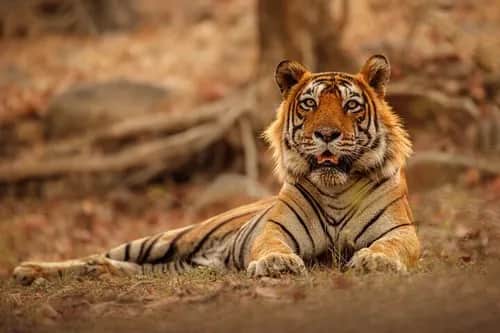
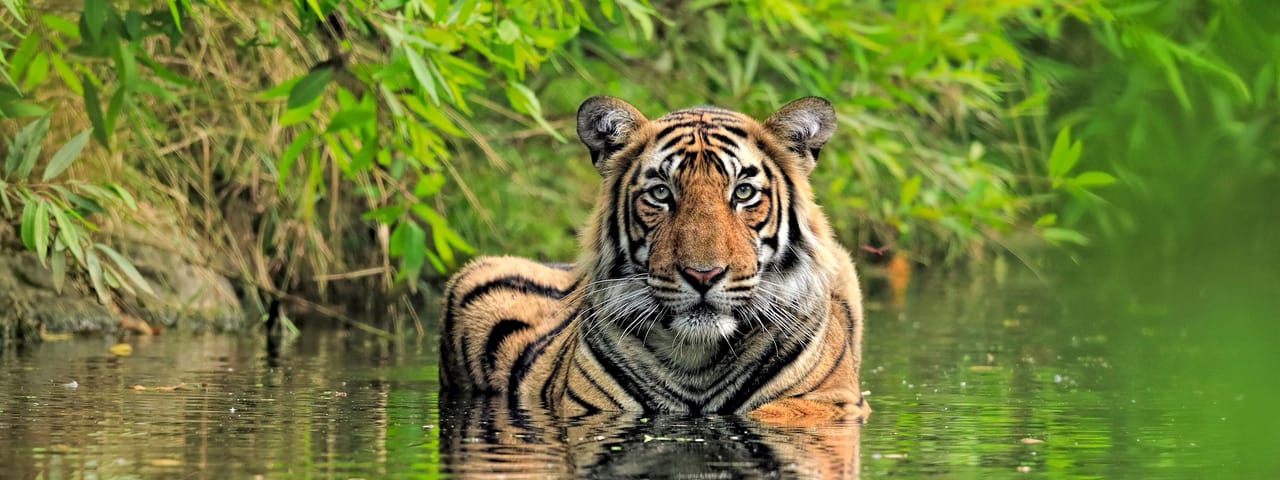
Tiger sitting in green water on a hot afternoon
T-number
T-20
Sex
Male
Associated zones
Zones 3 and 4, lakes area
Status
Not reported in recent seasons

Identity and Markings

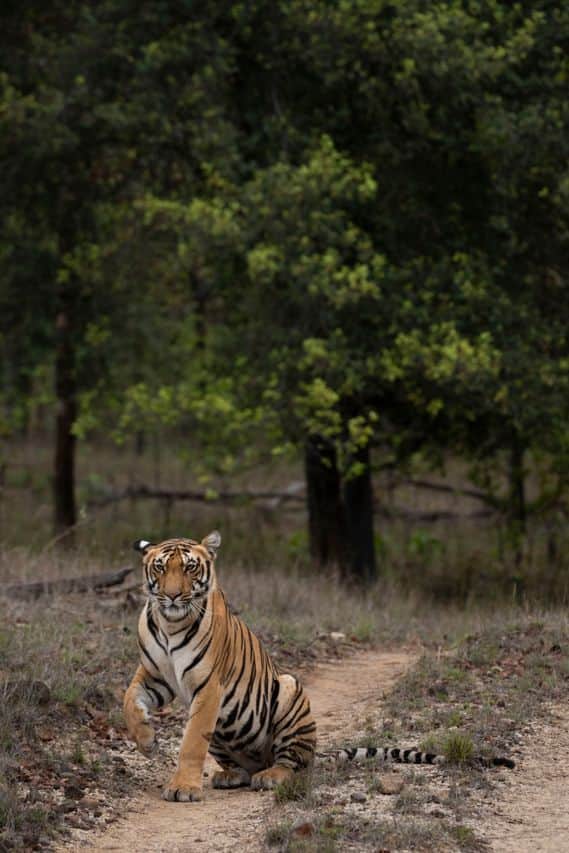
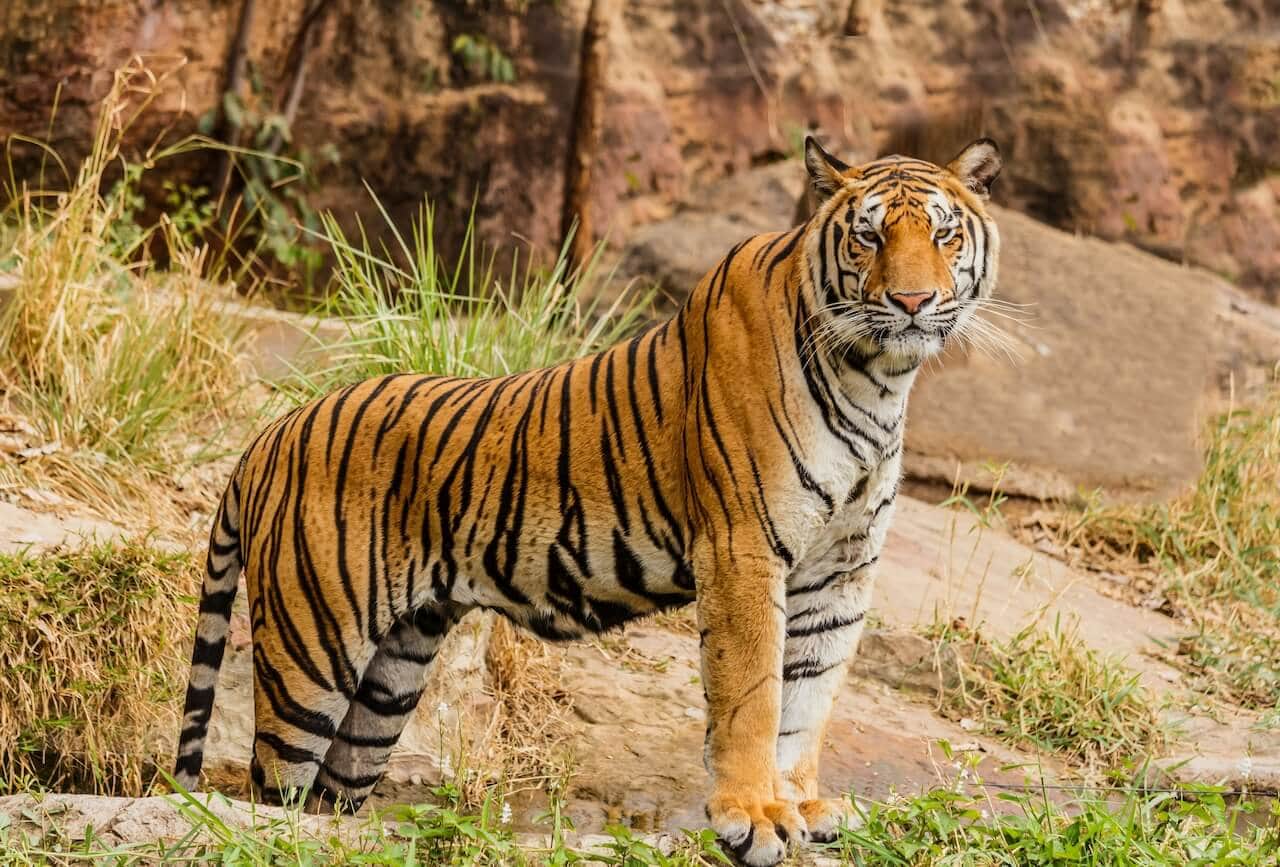
Jhumru was a big, thick-set male with a broad face and a heavy ruff, and guides identified him by his build and by the stripe pattern on his cheeks. He was calmer around vehicles than most males of his generation, partly, it is often said, because he spent so much time in the busiest part of the park. In photographs from the mid-2000s he is the large male walking behind or beside Machali on the lake shore.
Life Story

He held the lakes side as resident male through the middle 2000s, overlapping Machali's territory as a dominant male does. His paternity of her 2006 litter is the most widely repeated claim about him; earlier litters are attributed to different males in different accounts, so we do not list them. As he aged he was displaced by younger males and seen less often, and he faded from sighting reports. We are not aware of a confirmed record of his death, so we describe him as not reported in recent seasons.

Territory and Zones

His range covered the lakes and the ground around them, which under current zoning is mostly zone 3 with parts of zone 4, and probably extended further than the tourism routes show, as male ranges do. Zone boundaries are set by forest department notifications and have changed since his time, so descriptions of "Jhumru's zone" from older articles should be taken as approximate. The ground itself is unchanged: the three lakes, the fort above, and the tracks between.

Lineage

Jhumru is widely reported as the father of Machali's 2006 litter: Sundari (T-17), Krishna (T-19) and Satra (T-18). Through Krishna he is the grandfather of Arrowhead (T-84) and great-grandfather of Riddhi (T-124) and Siddhi; through Sundari he is the grandfather of T-73 in Kachida. Paternity in wild tigers is inferred from which male held the territory at the time rather than tested, so treat the claim as widely reported rather than proven. Either way, he stood at the head of the line that still holds the lakes.

Famous Moments

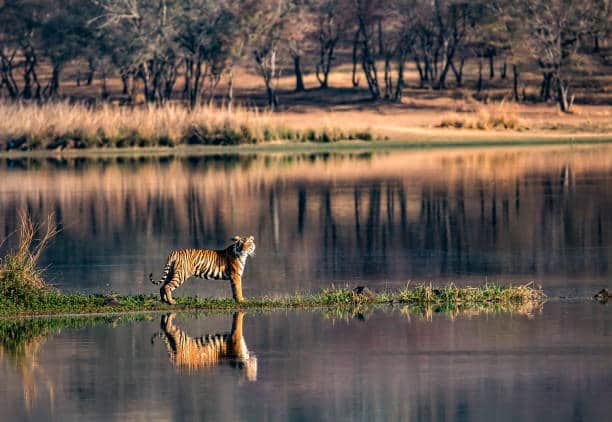
Jhumru's fame is mostly borrowed from Machali. He appears in the photographs and film of her peak years as the big male at her side, and in the story of the 2006 litter as the father. On his own account he was known for a habit of resting on the open lake edge in the afternoon in full view of the jeeps, which made him one of the more reliably photographed males of his generation. There is no single dramatic incident attached to him, which is perhaps the point: he was the steady male in a famous family.

Planning a Safari With Jhumru in Mind

You will not see Jhumru, but his descendants hold the lakes as of recent seasons. Ask us to request zone 3 or 4; the forest department allocates zones and cannot be persuaded. If you are interested in the male side of the story, ask your guide which male currently holds the lakes, because that changes every few years and is rarely written down. Afternoon drives in the cooler months are when males are most often seen resting by the water, as Jhumru used to.

Why Sightings Are Never Guaranteed

Males have larger ranges than tigresses and are seen less often even when resident. Jhumru himself went unseen for long stretches in his later years and then disappeared from reports altogether without anyone recording when. The lakes are the best-watched ground in the park, and even there the current male is a matter of recent reports rather than certainty. We plan around what guides have seen lately, and we say so plainly.

Tiger reflected in the still water of a Ranthambore lake
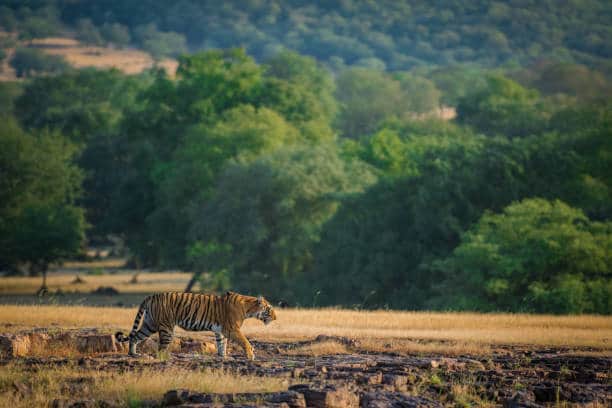
Tiger standing on rocks in Ranthambore

Jhumru's Descendants (Widely Reported)

RelationTigerNotes
MateMachali (T-16)Queen of Ranthambore, died 2016
Daughters, 2006 litterSundari (T-17), Krishna (T-19), Satra (T-18)Satra moved to Sariska; Sundari disappeared 2013
GranddaughterArrowhead (T-84)Via Krishna; reported deceased 2025
GranddaughterT-73Via Sundari; regular in Kachida
Great-granddaughtersRiddhi (T-124), Siddhi (T-125)Via Arrowhead; reported at the lakes

Frequently Asked Questions

Who was Jhumru T-20?

The dominant male of the lakes during Machali's peak years, and the tiger widely reported as the father of her 2006 litter of Sundari, Krishna and Satra.

Is Jhumru still alive?

He has not been reported in recent seasons and we are not aware of a confirmed record of his death. He was displaced by younger males as he aged and faded from sighting reports.

Which zone was Jhumru in?

The lakes area, mainly zone 3 with parts of zone 4 under current zoning, and probably further as male ranges are large. Zone boundaries are set by the forest department and have changed since his time.

Is Jhumru related to Riddhi?

By the widely reported lineage, yes: he is the father of Krishna, grandfather of Arrowhead and great-grandfather of Riddhi and Siddhi. Wild paternity is inferred, not tested.

Which male holds the lakes now?

That changes every few years and is rarely published. Ask your guide, or ask us when you book and we will pass on what has been reported recently.